End-of-Life Management Best Practice Guidelines (Version 1.0)
Do you prefer the guidelines as a pdf file?
Download PDFAre you interested in downloading a specific chapter?
Search the reports?
SearchIntroduction
List of abbreviations

1.1. Rationale, aim, and scope
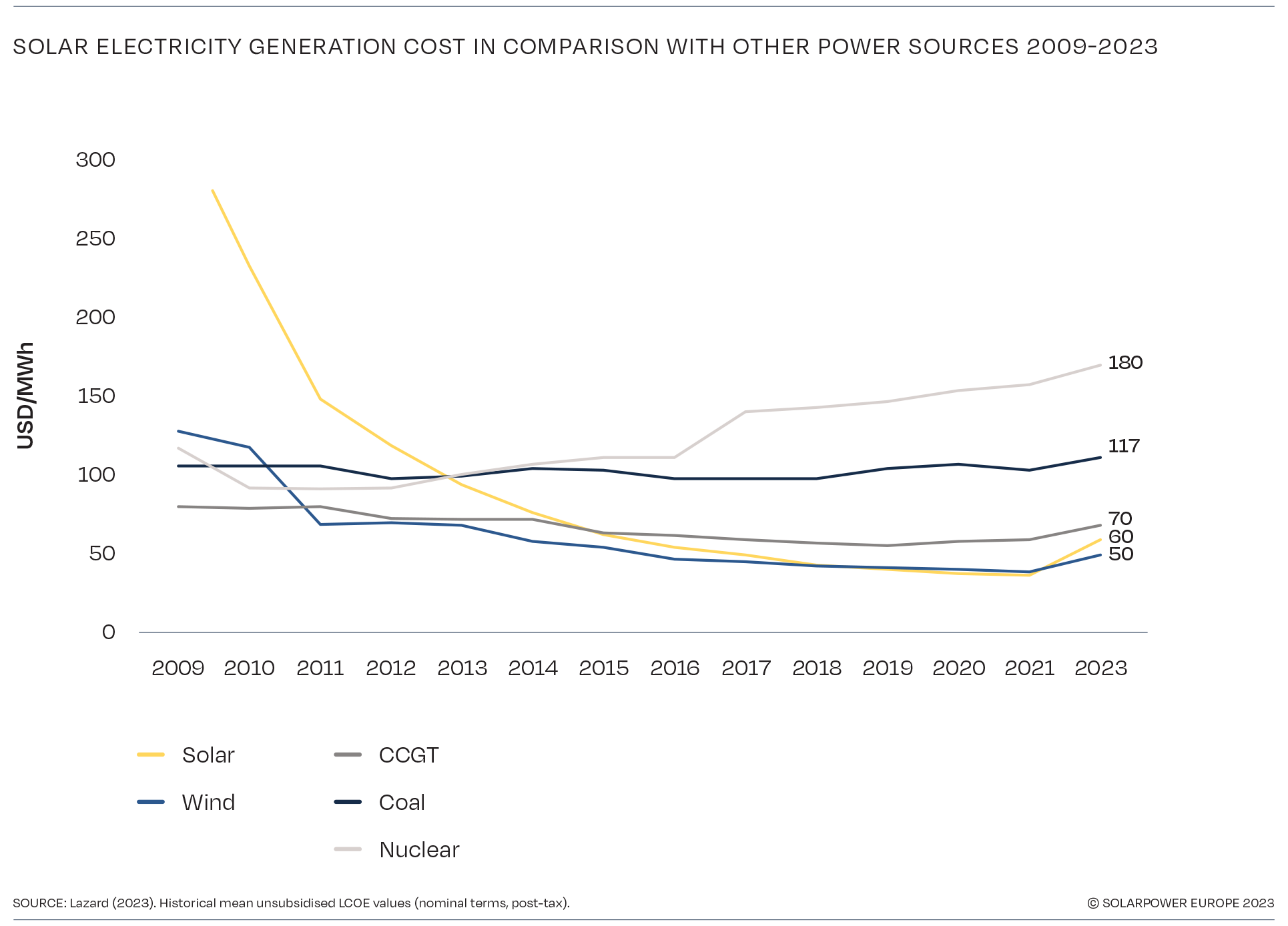
The European solar industry has experienced unprecedented growth in recent years. Driven by a rapidly decreasing levelised cost of electricity (LCOE) and a redoubling of efforts to accelerate the EU’s green transition, solar is beginning to realise its potential as the spine of Europe’s new, modern and resilient energy system.
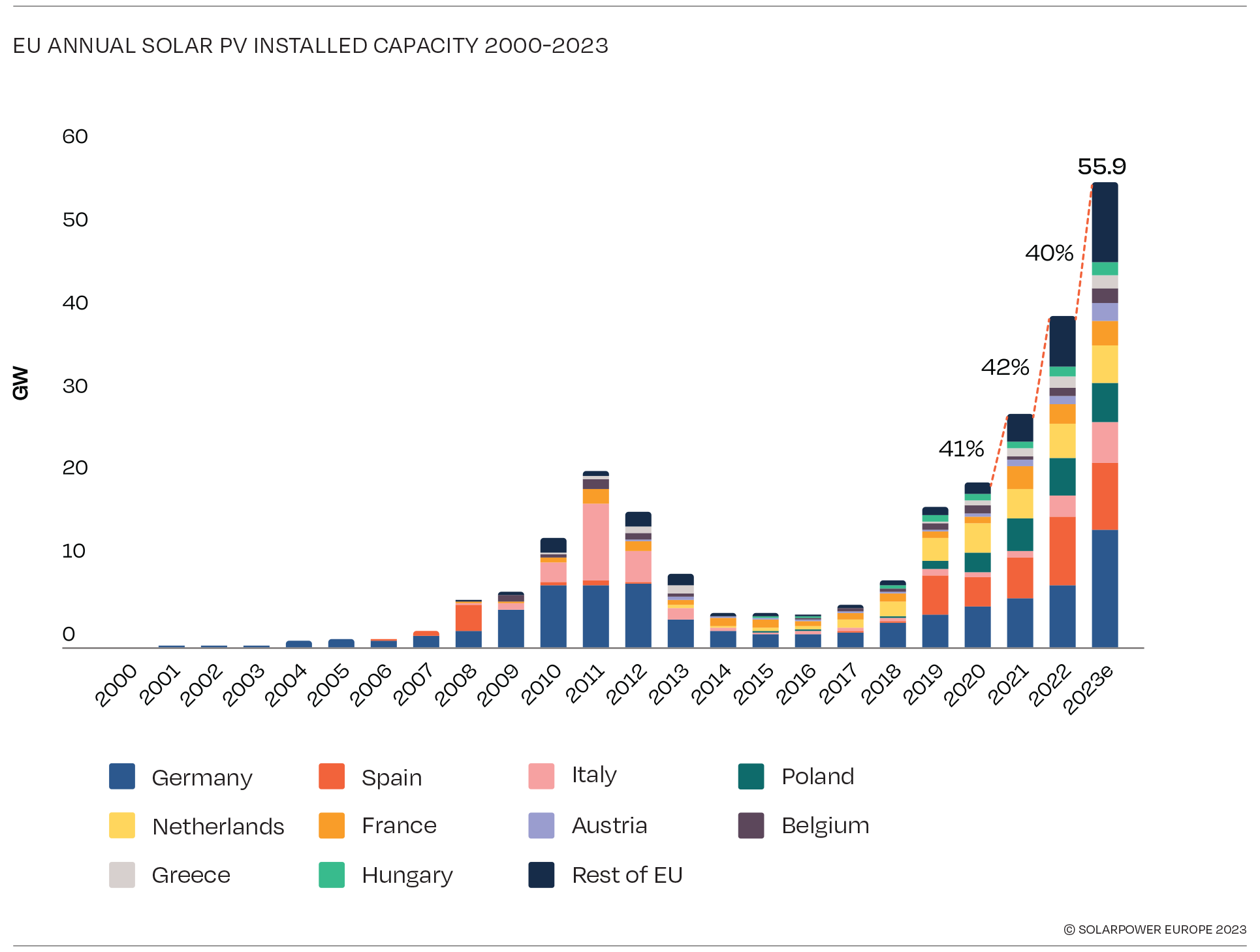
However, this impressive growth poses a key challenge for the industry in the future; namely, what to do once all the solar PV that has been installed begins to reach its EoL. Across the EU, over 260 GW of solar capacity were in operation at the end of 2023, a fleet that is poised to grow to at least 750 GW by 2030, as per the REPowerEU target. Considering that the first PV systems were installed in the early 2000s, and assuming a 30-year operational lifetime for PV modules, it can be expected that solar waste streams will start becoming sizeable around 2030, and will continue growing in the following decades. If poorly managed, the environmental impact of solar waste has the potential to cause serious damage to solar’s reputation as an environmentally friendly technology. Similarly, public opinion could potentially turn against the industry as landfills begin to fill up with scrapped solar panels.
These Guidelines detail the final stage of any solar asset’s lifecycle. They aim to provide a clear description of the legal obligations that apply to stakeholders of a PV power plant once it reaches EoL and the main methods that they can use to ensure compliance. Through raising awareness amongst the industry of best practice and the innovations taking place, these guidelines also seek to ensure that solar is able to make a valuable contribution to the EU’s circular economy aims.
1.2. How to benefit from this document
These Guidelines include an overview of the legislative framework governing waste management and management of waste electrical and electronic equipment (WEEE), drawing out the obligations placed on the solar industry at the EoL stage of a solar asset. Although they have not been tailored to individual stakeholders, the purpose of the Guidelines is similar for all – understanding the mandatory requirements for all stakeholders and the ways to ensure compliance with them. Furthermore, the Guidelines seek to regroup current research and efforts that are being developed to improve the circularity of solar, such as preparation for re-use of PV panels that have been decommissioned during revamping or repowering (for more information on best practices for revamping and repowering, see Chapter 7. Revamping and Repowering, in SolarPower Europe’s O&M Best Practice Guidelines.) Any stakeholders can benefit from this work and tailor it to their needs without lowering the bar and know what to ask for, offer or expect.
In line with other Best Practice Guidelines from SolarPower Europe the value proposition of this report is its industry-led nature, gathering the knowledge and experience of well-established and leading companies in the field of O&M service provision, recycling and circularity, waste management, utilities, and manufacturers. The scope of the legislation covered in these guidelines covers the utility-scale, commercial and industrial, and residential segments. The Guidelines are based on the experience of companies operating globally (with a focus on Europe) and identify high-level requirements that can be applied in Europe. However, it should be noted that there may be differences in the way that EU directives are transposed into EU Member State national legislation. This is not included and should therefore be considered separately if the Guidelines are to be used in specific countries.
The content covers technical and non-technical requirements, classifying them, when possible, into the following:
1. Minimum requirements, below which the approach to waste management is non-compliant with the relevant EU legislation.
2. Best practices, which are methods considered state of-the-art, producing optimal results by balancing the technical as well as the financial side.
3. Recommendations, which can add to the quality of the service, but whose implementation depends on the considerations of the Asset Owner, such as the available budget and services offered by the original equipment manufacturer.
To differentiate between these three categories, verbs such as “should” indicate minimum requirements, unless specified otherwise, as in, “should, as a best practice” or “as a recommendation”.