End-of-Life Management Best Practice Guidelines (Version 1.0)
Do you prefer the guidelines as a pdf file?
Download PDFAre you interested in downloading a specific chapter?
Search the reports?
SearchTransition from operations to End-of-Life
With the increase in the installed capacity of solar energy worldwide, the volumes of photovoltaic (PV) modules that will be decommissioned in the coming years are drawing increasing attention. In Europe, this topic is especially important for two main reasons: (i) the WEEE Directive, which categorises and sets precise targets for the collection and recycling of all WEEE, including PV panels under category 4, and (ii) the fact that many large PV fleets are approaching the end of their designed technical life (20-25 years) or being revamped/repowered with newer technology.
Today, PV panels are contributing significantly to the first step in the waste hierarchy, prevention of waste. With product guarantees of ten years and performance guarantees of over 20 years, PV panels are very effective at ensuring that society avoids the impacts of waste and the related costs for many years.
When PV systems are decommissioned, it is possible for the lifetime of PV panels to be extended during a ‘second life’, which is acknowledged under the Waste Framework and WEEE Directives as re-use.
Nevertheless, recycling is the default strategy for decommissioned PV panels in Europe. However, it is estimated that in the next 10-15 years, more than 50% of the PV panels considered as “waste” could be re- used because they are still functional. This would be on condition that the re-use is done under environmentally sound, qualitative and safe conditions.1 This is in line with the principles of circularity, which aim at maximising the usage of equipment before reaching the recycling stages (for more information on recycling PV components, refer to Chapter 4. Takeback and recycling programmes).
The work presented in this chapter is meant, therefore, to increase awareness and understanding of the current state-of-the-art practices regarding the EoL management of PV panels, generally carried out by O&M service providers on behalf of the PV plant’s owners and identify best practices that could guide and align all stakeholders. The guidelines proposed here are meant to bring consensus, improvements, and recommendations for more efficient waste management measures. They also aim to contribute to the proper, transparent and organised reduction of PV waste, thus supporting the transition to a more sustainable and circular PV sector.
1 Oviedo Hernandez et al., 2022.
3.1. The PV-waste challenge
During the operation phase of large-scale PV plants, there are three main activities that contribute to the generation of decommissioned PV panels and inverters:2
i. Preventive and corrective maintenance
ii. Revamping and repowering interventions
iii. Disposal, i.e., when the owner of the PV panels or inverters discards, is willing to discard or must discard these products.
PV devices are considered as waste when they are no longer able to perform their originally intended function, even after repair. Recyclates are legally considered waste as well, however, recyclates are secondary raw materials that have been generated by means of the recovery of waste or are generated in the disposal of waste and are suitable for the production of products. When it comes to PV panels, the solar industry usually considers them as waste when power drops below a guaranteed level (see Figure 4) or as part of an insurance claim after damages from severe weather events (e.g., hail).
In addition, when a PV panel reaches the end of its natural technical life (after at least 25 years of operation), it is estimated that it still possesses approximately 80% of its initial power generation capacity that could be exploited by giving the module an extended, or second life.3

Currently, the very first European PV fleets, installed during the boom of feed-in tariff schemes, have passed midlife (10+ years old) and we are experiencing an unprecedented increase in revamping and repowering activities aimed at improving the performance of existing assets through the replacement of old PV panels and inverters with new ones. This contributes to an increasing number of panels being decommissioned before they reach the end of their natural lifetimes, as would have been envisioned in the project’s original financial model.
The premature replacement of PV panels presents new opportunities for optimising the performance of existing PV assets without requiring new land. At the same time, however, it poses challenges for O&M service providers, local waste consortia and recyclers who must collect and properly handle the incoming volumes of decommissioned PV panels. Is recycling the only option or a second life can be explored (Figure 5)?

2 ETIP PV, 2022.
3 Majewski et al., 2021.
3.2. Management of decommissioned PV panels: current practices
It is common practice in the utility-scale sector that when PV systems need to be decommissioned, it is the O&M service provider that often activates the process of dismantling and disposal on behalf of the plant owners, providing mainly legal/administrative support and logistics. The decommissioned PV panels and/or inverters are then collected by an approved waste collecting company who ships these to a treatment facility to be processed in line with to the relevant national and local legislative framework.4 A more detailed process is shown in Figure 6 below.

4 Oviedo Hernandez et al., 2022.
3.3. The re-use market: opportunities and challenges
From the previous section, we learned that it is common practice that decommissioned PV systems enter the waste stream directly and are processed to recover materials. However, some studies and experts have enabled a discussion about defining what constitutes a ‘reusable’ PV panel or inverter and under which conditions these products can be transformed into qualitative, safe and environmentally sound second-hand products.5
The main reasons for preparing functional PV panels or inverters for re-use are connected to the opportunities and advantages that this practice can bring such as the examples mentioned below and in Figure 7. However, beyond the opportunities and advantages, the business perspective should be considered as well. Preparing functional PV panels or inverters for re-use not only unlocks economic benefits but also serves as a means of complying with existing legislation and bolstering the reputation of companies for sustainability and circularity.

The opportunities and advantages of preparing functional PV panels and inverters for re-use are:
• Preventing them from prematurely entering the waste stream.
• Reducing the amount of waste generated by the PV industry.
• Reducing the unnecessary extraction of valuable raw materials and enabling the recovery of relevant elements, such as metals.
• Decreasing the environmental impact of the PV sector and improving energy access, especially in poorly connected areas.
Furthermore, according to the Waste Framework Directive’s waste hierarchy, re-use has a higher priority than recycling, recovery, and disposal, coming just after waste prevention. Thus, ideally, recycling would only be considered when qualitative, safe and environmentally sound preparation for re-use is not possible, such as in situations where the components are damaged and cannot be repaired. However, to comply with the principles of circularity and sustainability, preparation for re-use can only take place when there is a set of technical conditions that define when a PV panel is ‘reusable’ (e.g. minimum threshold of electricity output, minimum amount of testing, identity card accompanying each PV panel prepared for re-use and conditions under which a re- use centre for PV panels can operate). In other words, decommissioned PV panels should only reach the recycling phase when these are no longer functional nor safe for second-hand usage.
3.1.1. Challenges
There are some challenges hindering the development of a preparation for re-use market. One of them being the legislation, more specifically, the interconnection between the Waste Framework Directive 2008/98/EC, the WEEE Directive 2012/19/EU and the Waste Shipment Regulation 1013/2006/EC. Preparation for re- use is acknowledged as one of the steps in the waste hierarchy of managing WEEE, and there is a target of 80% preparation for re-use and recycling for all products (equipment) under Category 4 ‘Large equipment’ in the WEEE Directive.7 However, the majority of operators currently trading second-hand PV panels are not familiar with the three waste legislations described above. Moreover, the lack of an international standard, norm or technical specification related to the preparation for re-use of PV panels means that the second-hand PV panel market currently operates in a grey area, explaining why it is not yet widely developed.8
Currently, the practice of exporting second-hand PV panels to low-income countries with less comprehensive waste regulations is creating a major environmental concern, particularly as their collection and proper treatment may not be as easy to guarantee after their second life. Moreover, the dangers posed to people by exporting potentially unsafe PV panels entails significant ethical issues. The top destinations of second-hand PV panels are the Sahel-countries, Afghanistan, Pakistan, the Palestinian Territories and Turkey.9 A rather small (around 10 MWp) and temporary market still exists in (Western) Europe where feed-in tariff regulations often require “very similar” replacement modules in case of damage.10 Overall, re-used or repaired PV panels are not competitive for new residential, commercial and utility-scale PV installations in high-income countries or even in developing countries with government incentives to deploy PV.11 The lack of a performance guarantee, functionality, and concerns over the safety and quality of used PV panels, as well as the lack of rules and standards on labelling and testing, are seen as the main barriers for the development of the second-hand market.12 Moreover, the low prices of new PV modules further weaken the economic argument for a second life market.13
To tackle some of these challenges, a guideline for preparing PV panels for re-use was published in 2022 by the H2020 European-funded project CIRCUSOL.14, 15 This guideline was a short update of an initial proposal described in the PV CYCLE Study of 2020.16 It contains a first attempt to define the steps needed for the application of several testing methods with the aim of defining what a functional PV panel is and ensuring sufficient quality and safety while still being cost- effective. This document is now being used as a baseline by the IEC Technical Committee (TC) 82, which is currently drafting a Technical Report. The result shall then become the basis for the TC 82 to decide if a Standard or Technical Specification is required. Soren is also currently having a working group developing a set of technical criteria for PV re-use.
6 Oviedo Hernandez et al., 2022, Majewski et al., 2020, Tsanakas et al., 2020, Lempkowicz et al., 2021, Dodd et al., 2020, Godinho Ariolli, 2021, Salim et al. 2019, Van Der Heide et al. 2022).
7 Large Equipment means Washing machines, Clothes dryers, Dish washing machines, Cookers, Electric stoves, Electric hot plates, Luminaires, Equipment reproducing sound or images, Musical equipment (excluding pipe organs installed in churches), Appliances for knitting and weaving, Large computer-mainframes, Large printing machines, Copying equipment, Large coin slot machines, Large medical devices, Large monitoring and control instruments, Large appliances which automatically deliver products and money, Photovoltaic panels.
8 Tsanakas et al., 2020, Godinho Ariolli, 2021.
9 Tsanakas et al., 2020, Godinho Ariolli, 2021, Van Der Heide et al. 2022.
10 Tsanakas et al., 2020, Van Der Heide et al. 2022.
11 See 2.
12 See 2.
13 Majewski et al., 2020, Tsanakas et al., 2020, Lempkowicz et al., 2021, Dodd et al., 2020, Godinho Ariolli, 2021, Salim et al., 2019, Van Der Heide et al., 2022.
14 https://www.circusol.eu/files/Deliverables/D3- 2_Labelling_and_certification_protocols_for_second_life_PV_module s.pdf
15 Oviedo Hernandez et al., 2022, Van Der Heide et al., 2022).
16 See 2.
3.4. Guidelines for preparing for re-use
“Preparing for re-use” is defined in the European Waste Framework Directive 2008/98/EC as “checking, cleaning or repairing recovery operations, by which products or components of products that have become waste are prepared so that they can be re-used without any other pre-processing”.17 This section will discuss suggestions to inspire these operations based on existing guidelines, technical discussions in the IEC Technical Committee 82 and on the experiences of actors in the PV sector.
The focus will be given to simple and smart logistics (handling and packaging) and targeted quality assurance procedures, contributing to the identification of functional PV components eligible for re-use (with or without repair), thus preventing them from entering the waste stream prematurely.
3.4.1. PV panels
To qualify for re-use, PV panels should undergo functionality testing procedures that are technically feasible, cost-effective and adapted for the second- hand market, giving priority to safety over performance. To be prepared for re-use, PV panels functionality should be tested on-site according to specific technical criteria (e.g. IEC 61215). On the contrary, replicating the same qualification procedures for new PV panels should be avoided because it would be too costly and technically very challenging.
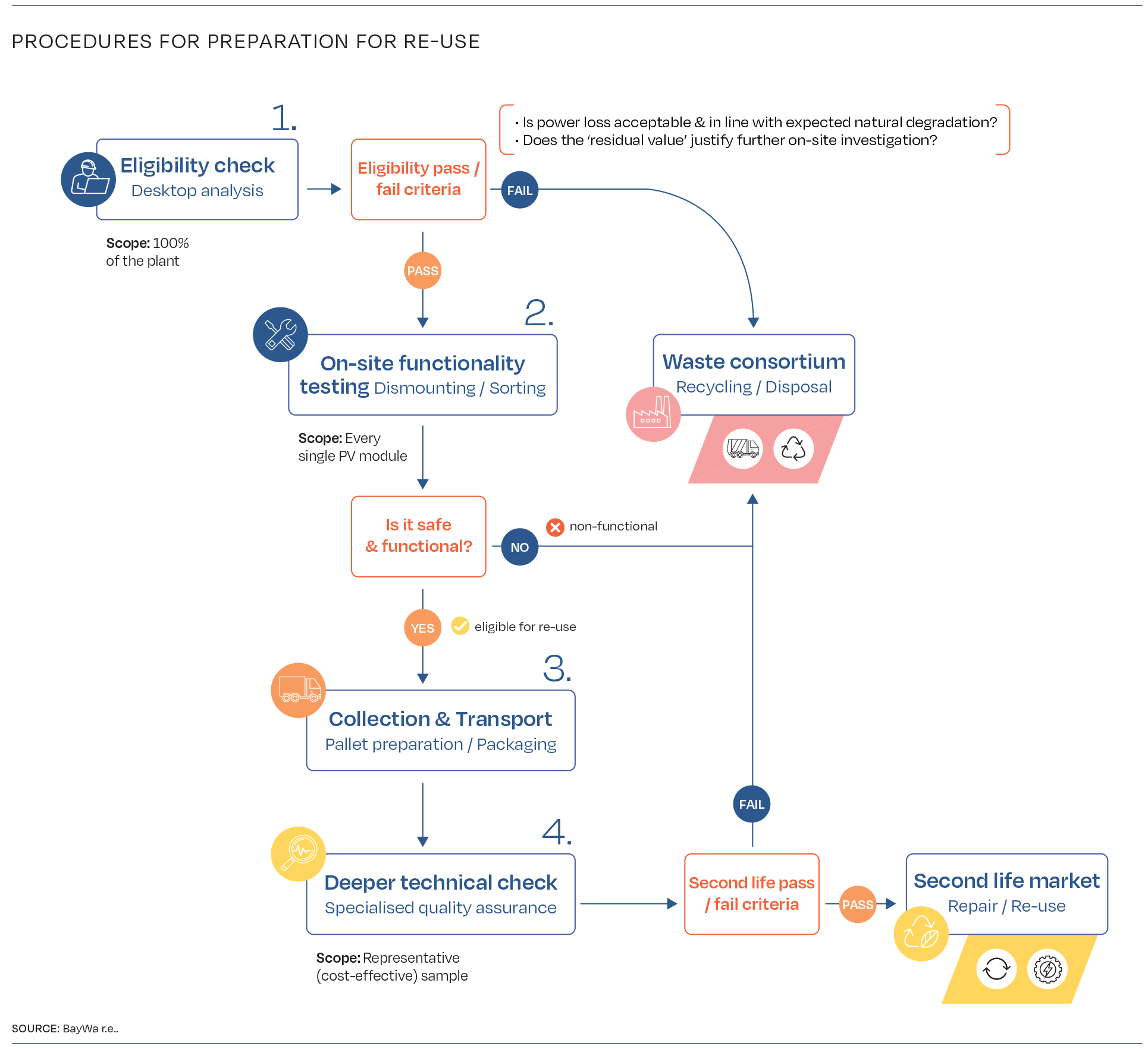
The suggested tests and steps proposed for the preparation of PV components for re-use are illustrated in Figure 818 and described below.


1. Eligibility check (desktop analysis before going on-site)
This consists of an analysis based on electrical and weather variables and maintenance information (O&M historical data) to calculate and/or estimate the performance loss of the entire plant or sub- sections of it (at transformer, inverter or string level). This check is meant to be done in the office to decide whether it makes sense to perform additional checks on-site. Additionally, known failures should be assessed based on annual or monthly reports and punch lists made available by the O&M service provider and/or Asset Manager, such as IR thermographic and I-V curve measurement campaigns, commonly done contractually at least once a year. Following this logic, O&M service providers that follow high- quality monitoring practices (according to international standards) and with quality assurance evidence in their hands, should be able to avoid costly diagnoses.
Please note that this check should make the most out of all the already existing documentation that defines the history of the plant, not limited to O&M data only. This approach will minimise additional costs.
Suggested eligible pass/fail criteria:
• Is power loss acceptable and in line with expected natural degradation?
Example: The Power Loss Rate (PLR) of a module, calculated with the last 5 years of monitoring data, is estimated to be 10%/year, which deviates greatly from the 0.8 %/year defined by the manufacturer. The module does not qualify for re-use and is sent to be recycled.
• Does the ‘residual value’ justify further on-site investigation?
Example: During a revamping project of a 10- year-old plant, it is verified that the PLR is in line with the expected annual degradation rate provided by the manufacturer. Furthermore, the module type holds a high value for a specific asset owner because it is no longer available on the market and can be used as spare part. It is then decided to go ahead and continue with the re-use preparation steps.

2. On-site functionality testing
This step is meant to be carried out by site technicians shortly before and/or while decommissioning PV panels (e.g., during revamping or repowering activities). It includes dismounting, sorting, and on-site temporary storage.
Functionality testing should be done for every single panel, including but not limited to:
• Dedicated visual inspection (supported by a checklist that covers known failures that can be detected with the naked eye), according to Standard IEC 61215 (minimum illumination 1000 lux).
• Insulation resistance test at string box level or panel level if feasible (according to IEC 62446-1 “Requirements for testing, documentation and maintenance”).
• (Desirable) low-cost infrared thermography with hand-held device or smartphone (according to IEC-TS 62446-3-2017 “Outdoor infrared thermography”).
Suggested functionality criteria:
• Is the PV panel affected by a severe failure such as, but not limited to: damaged frame, broken glass, damaged cables and connectors, backsheet cracking/chalking, delamination/ bubbles and/or corrosion?
• Has the PV panel failed the insulation resistance test, posing a potential risk to human health?
Please note that this step should take advantage of the fact that field technicians are already on- site executing module substitutions (e.g., due to corrective maintenance or revamping/ repowering activities). In this way, the time spent on-site is optimised as little extra effort is needed. Once the panels are dismounted and the functionality testing is completed, sorting into two main categories is possible: non- functional and eligible for re-use.
3. Collection and transportation
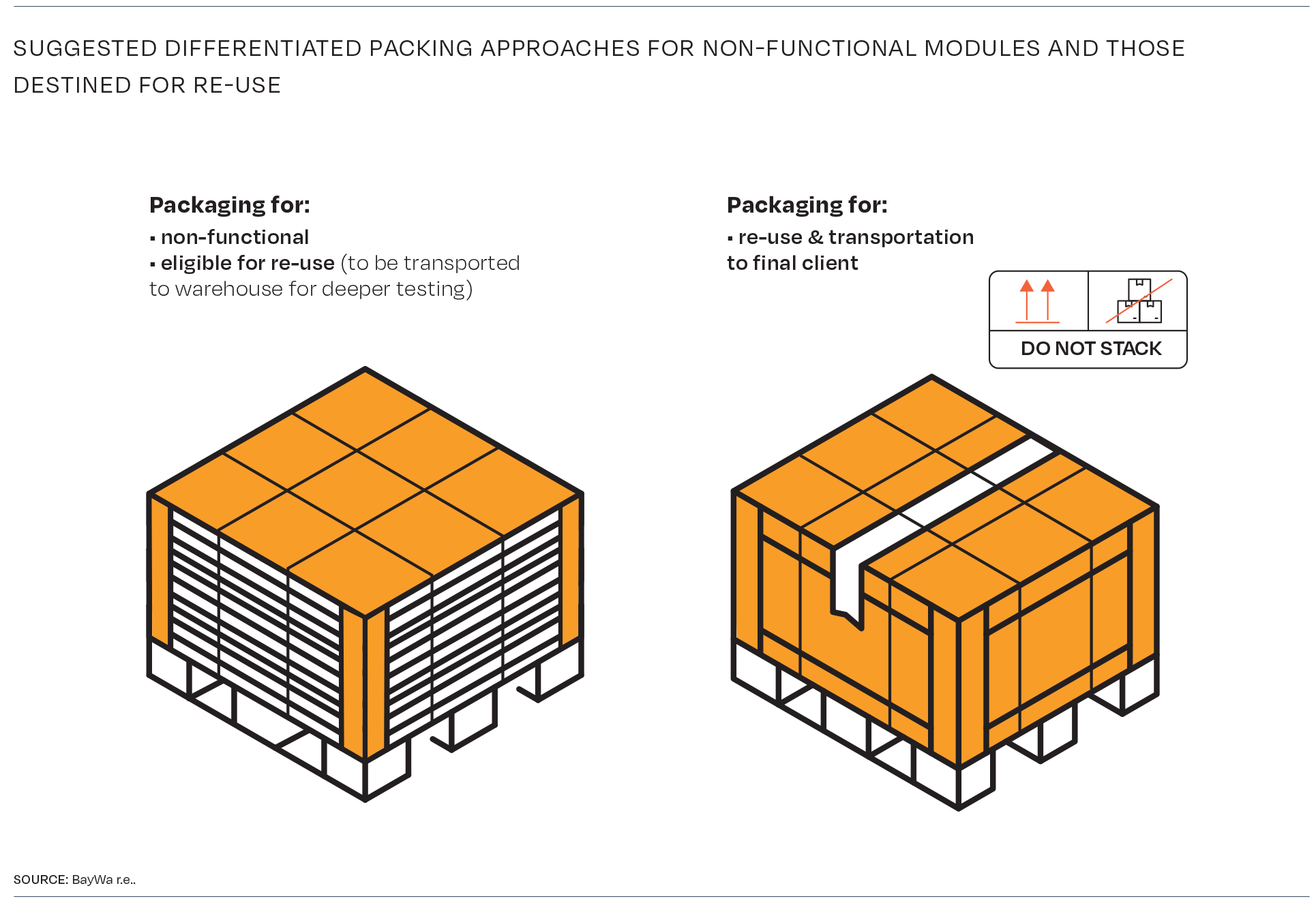
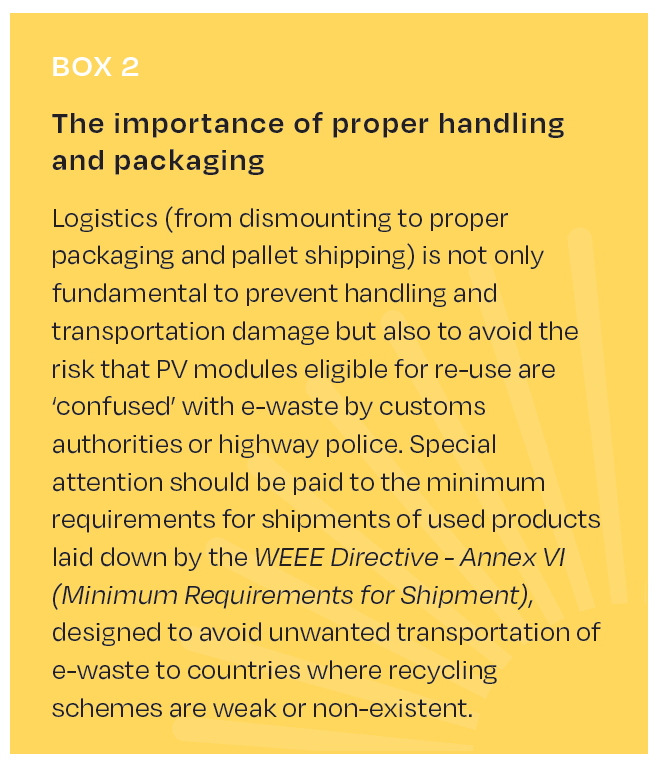
Once the PV panels have been piled up into two different categories (non-functional and eligible for re-use), it is time for proper pallet preparation and packaging, to avoid further damage and ensure that the shipment is not confused with e-waste. It is suggested that a differentiated packaging procedure is done for functional and non- functional panels (see Figure 9). To minimise extra packing costs during revamping activities, it is advised to re-use the pallets and cardboard of the new batches of panels being installed.
4. Deeper technical check
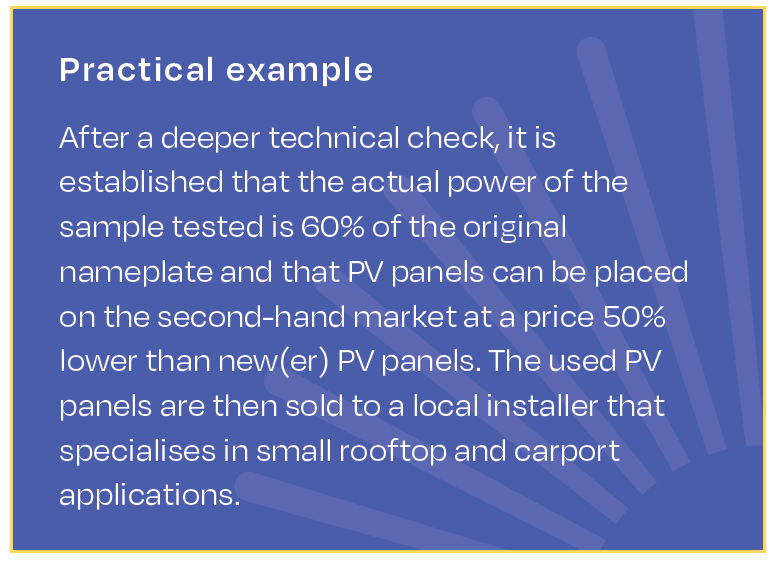
This last step will provide definitive and accurate evidence on the health status of panels that have been categorised as eligible for re-use in previous steps. Specialised quality assurance procedures (see Figure 10) should be applied to a representative sample to ensure that costs are kept at a manageable level. Based on this check, the final value and price a of PV panel can be set and agreed with the final client.
Suggested second life pass/fail criteria:
• Is the PV panel affected by failures such as severe PID (Potential Induced Degradation) and microcracks?
• Does the PV panel have ‘enough’ residual value for its second life according to its final usage?
• Does the panel’s actual power justify its price?


3.4.2. PV inverters
In contrast to PV panels, inverters are easier to repair by simply replacing the defective elements of the device. There are several options possible:
• On-site repair: depending on the manufacturer, it is possible to replace defective pieces such as fans, or very specific electronic components.
• Replace and take back: the decommissioned inverter is replaced by a new one (same model or an updated version) and the defective one is sent back to the manufacturer’s repair centre (when possible). If it is not repairable, then it is sent to be recycled (see chapter 5). If it can be repaired, it is then stored for re-use by another customer.
With repair and/or replace options, stakeholders (manufacturers, installers, O&M service providers) can postpone the EoL phase of the inverter, instead of sending it for e-waste treatment immediately. These options of repair and exchange of inverters are not systematically considered or used by stakeholders due to a lack of information or awareness, even though they could bring additional value.
3.4.3. Communication Devices
In the context of photovoltaic systems, communication devices, like power plant controllers and sensors, are crucial components. To manage their EoL and recycling responsibly, it is essential to establish a well-documented lifecycle management process during installation. Collaboration with all stakeholders, including the EPC service provider, manufacturers and other relevant teams, will ensure a sustainable approach. Providing adequate training and documentation to employees about device updates and replacements is crucial for efficient management. Conducting a thorough risk assessment helps prioritise replacements and upgrades. Additionally, considering the potential for re-use before recycling or disposing of devices is important. Following these guidelines fosters environmentally conscious practices, contributing to the overall sustainability of renewable energy infrastructure.
Criteria for EoL
Determining the end of the operating phase for a communication device involves considering various critical factors:
• Availability of spare parts and repair services: If the manufacturer or third-party suppliers discontinue providing spare parts or repair services for the device, it becomes challenging to maintain and repair it in case of failure. The lack of access to essential components may render the device obsolete and unsuitable for continued use.
• Security updates and firmware upgrades: The continuous availability of security updates and firmware upgrades is crucial for safeguarding the device against evolving cyber threats. When a manufacturer stops providing updates, the device may become susceptible to security vulnerabilities, posing potential risks to the entire system.
• Safety requirements and regulatory compliance: In the ever-changing landscape of safety standards and regulations for photovoltaic systems, communication devices must adhere to the latest requirements. If a device no longer meets the necessary safety standards or fails to comply with updated regulations, it becomes imperative to consider replacing it with a more suitable and compliant alternative. Ensuring that all communication devices meet the required safety criteria is crucial for maintaining the overall integrity and reliability of the PV installation. By staying up to date with safety standards and regulatory changes, you can proactively address potential safety concerns and optimise the performance of the entire system.
• Reliability and frequency of failures: Frequent failures, or an increasing need for repairs are strong indicators that a communication device has reached its EoL. A device that is no longer reliable can disrupt operations, leading to downtime and hampering system efficiency.
• Compatibility with other devices and protocols: In a dynamic technological landscape, seamless integration with other devices and protocols is crucial. If a communication device is no longer compatible
with newer systems, it can hinder the overall performance and functionality of the entire setup.
• Calibration support and discontinued manufacturer support: Communication devices equipped with sensors requiring periodic calibration for accuracy must receive ongoing support from the manufacturer or authorised service providers. If calibration services are discontinued or not available within the recommended timeframe, the device's accuracy may be compromised, making it unsuitable for critical applications. Similarly, the EoL indication is evident when the manufacturer no longer provides support for the communication device due to its age or business closure. This lack of support may lead to challenges in obtaining replacement parts, updates, or technical assistance when issues arise, necessitating device replacement considerations.
• Irreparable physical damage: Irreparable physical damage, such as severe impact, water damage, or other catastrophic events, can render a communication device incapable of fulfilling its intended function. In such cases, the device is deemed to have reached the end of its life. Devices with significant physical damage may pose safety hazards, malfunction, or fail to operate as intended, making them unsuitable for continued use.
Process and recommendations for End-of-Life devices
When a communication device reaches its EoL in a PV system, several essential steps need to be taken to ensure proper handling and transition. The process begins by checking the documentation outlined in the lifecycle management process. This documentation should include comprehensive details about all installed devices, such as specifications, purchase dates and installed firmware or software versions. Internal instructions for preparations for recycling or re-use should also be available, along with information about possible recycling processes with local partners or an agreed recycling process with the manufacturer or EPC service provider. The contact information of the party responsible for initiating the relevant EoL process must be readily accessible.
1. To minimise disruption during the replacement process, backups of the data and configuration from the affected device should have been created and made available. This ensures that the responsible O&M service provider can properly replace the device without losing crucial data and with minimal downtime.
2. Depending on who determines the EoL situation, various stakeholders need to be alerted. The O&M service provider and the owner should be informed of the device's status. If the manufacturer is involved in the EoL process, they must also be notified downstream.
3. For proper documentation, key information such as the manufacturer, model, serial number, purchase date and software/firmware version of the EoL device should be recorded. Any notes regarding the internal recycling process, whether conducted by the company itself or the manufacturer, must also be documented.
4. The documentation needs to be passed on from the O&M service provider to the responsible vendor or team handling the recycling or re-use of the components.
5. In some cases, there may be a need to close the O&M contract for the specific device. This should be addressed within the internal lifecycle management process. The O&M service provider should be informed of the device's replacement and, if applicable, the cessation of support for the specific device.
6. Additionally, data protection measures are crucial to safeguard customers' sensitive information. Proper erasure or destruction of sensitive data from communication devices is essential to protect customers' information and prevent data breaches. After decommissioning, thorough data erasure or physical destruction protocols should be implemented to ensure that confidential information remains protected throughout the EoL process.
By following these steps and adhering to the documentation and data protection measures, the EoL phase of communication devices in a PV system can be managed effectively and responsibly, ensuring a seamless transition and adherence to regulatory requirements.
Reusing communication devices
When a communication device reaches its EoL but does not yet qualify as waste, there are several considerations for potential re-use or repurposing.
In recent years, the proliferation of PV systems has led to a surge in the number of communication devices utilised in these installations. Designed for long lifespans, there is currently a limited supply of EoL devices available on the market. Consequently, there are no established markets or providers to process, refurbish, and resell these devices. However, with the continually increasing number of PV systems and associated communication devices, this landscape is poised to change in the coming years.
As the industry evolves, opportunities for second life and re-use of these communication devices may emerge. Depending on the provider and operator of PV installations, internal applications in which these devices could still serve a purpose might be identified. Amidst this dynamic environment, exploring the potential for reusing EoL devices could offer sustainable and cost-effective solutions, benefitting both the industry and the environment. Below are key considerations and potential ways of re-using communications devices.
• Sensors and Guaranteed Lifetime
Reusing sensors can be challenging due to the manufacturer's promised guaranteed lifetime or measurement correctness. As these devices often have specific lifespans, their re-use might not be feasible, especially in critical applications where accurate measurements are crucial.
• Devices in Different Applications
For devices like power plant controllers or network devices, there might be opportunities for re-use in smaller power plants with lower security or availability requirements. These devices could also find use in other areas such as electric vehicle charging stations, where their functionalities may still be suitable, despite not meeting the current owner's requirements for security, encryption, or other protocols.
• Categorising Functional and Non-Functional Devices
Creating a matrix to categorise functional and non- functional devices can aid in making re-use decisions. Several possible reasons can render devices no longer usable:
- Devices that are no longer supported by the manufacturer, with support to the product being discontinued, a lack of software updates, or unavailability of spare parts due to the manufacturer's closure, should be considered for recycling. The potential risk may outweigh the benefits of keeping them in operation.
- Damaged or non-functioning devices can be evaluated by the manufacturer to determine if a module or part can be replaced. If applicable, the device could be repaired and re-used; otherwise, it should be considered for recycling.
- Devices that no longer meet new requirements can potentially be repurposed for other fields of application or purposes where their functionalities are still relevant and useful.
- Devices with expired calibration, or where calibration services have been discontinued, should not be used in environments where reliable measurements are required, making recycling the appropriate course of action.
3.4.4. Batteries
To harness solar energy effectively, the challenge of its intermittent nature must be solved. To integrate solar
power on a large scale into the electrical grid, utility- scale PV plants with advanced grid-friendly features are needed to ensure stability and reliability. Batteries come into play as crucial energy storage devices within solar systems, capturing surplus energy. This continuous power supply minimises PV curtailment and facilitates cost-effective integration of more solar power. These batteries, including lead-acid, lithium- ion, and flow batteries, offer a range of benefits for solar energy storage.
Repurposing
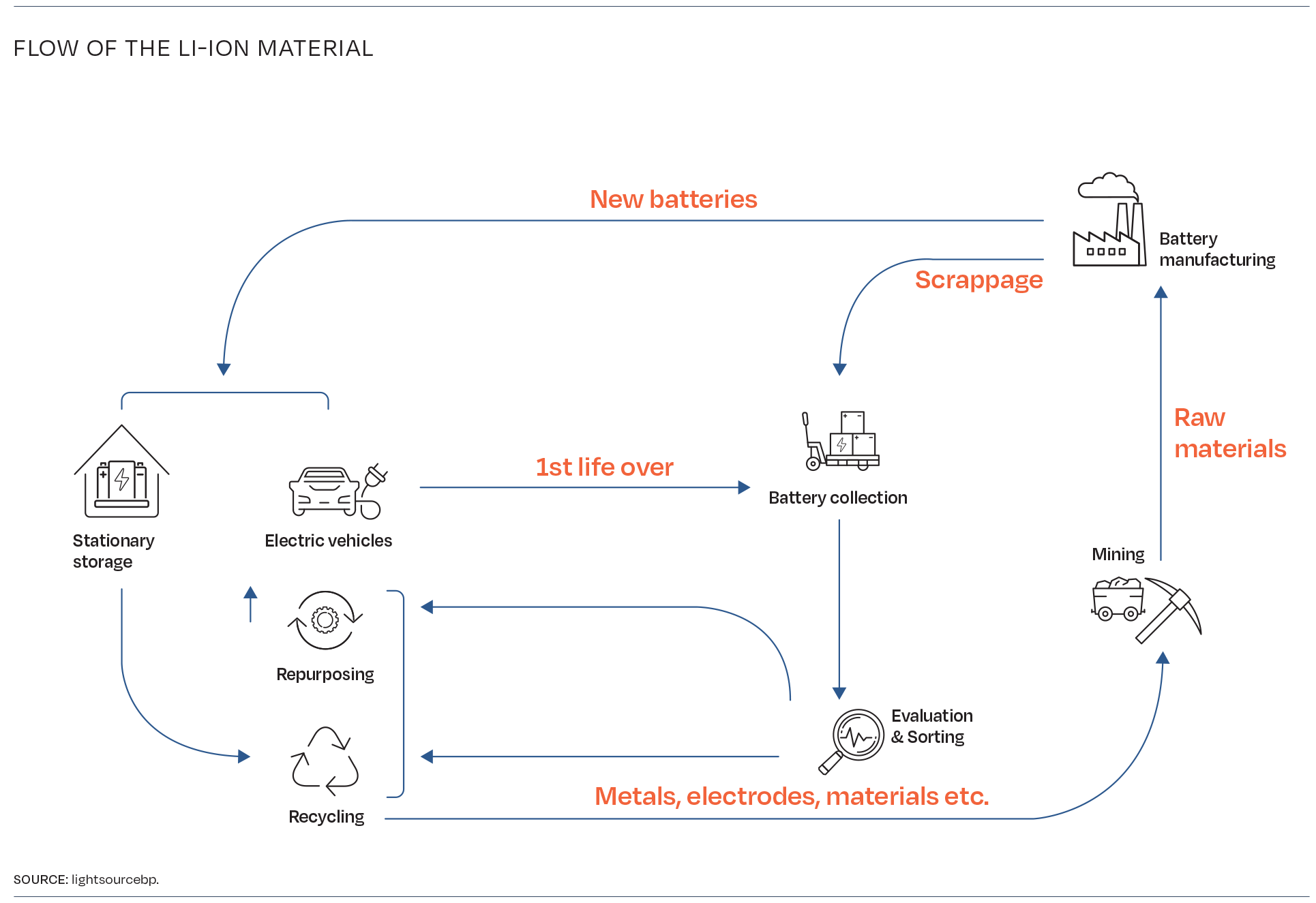
Repurposing old batteries at the end of their life to different applications is a huge boost to circularity.
After use a battery can still retain up to 70% of its original capacity and be installed in several other applications that are less demanding. Possible applications are at fast-charging stations, rooftop and microgrid storage systems.
A key long-term driver for lithium-ion battery repurposing in particular will reducing the pressure on critical raw material value chains.
3.4.5. Racking systems and trackers
A crucial facet of managing the complete lifecycle of these plants involves dealing with the balance-of- system (BOS) equipment, which encompasses among others (inverters, junction boxes, wires, frames, and mounting equipment) racking systems and trackers. As the PV industry continues to grow, the importance of addressing the EoL aspects of these BOS components becomes increasingly evident. Among the BOS equipment, trackers and racking systems play a pivotal role, not only in optimising the efficiency of solar panels during their operational lifespan but also in the sustainable management of these components once they reach the end of their utility. Generally speaking, the management of racking systems and trackers is in accordance with the waste hierarchy of the Waste Framework Directive 2008/98/EC, including the (1) best possible avoidance of metal waste and other waste (2) best possible re- use of metals and raw materials, (3) recycling of metals or raw materials at local recycling centers, and the (4) disposal of residual materials in accordance with local legal regulations.
System maintenance and repair are essential to ensure the continued functionality of solar power plants. This may involve replacing tracking parts if they were part of the original design, among other necessary repairs. However, it's not just about maintaining these components; it's also about finding ways to extend their useful life and reduce waste.
One key approach is the prioritisation of secondary use or re-use of these equipment components. The re-use of recovered materials, especially racking systems and trackers, offers the opportunity to reduce manufacturing costs, making PV modules and BOS equipment more affordable on the primary market. Moreover, recovering materials allows diverting valuable resources like silicon, silver, cadmium, tellurium, aluminum, and copper from landfills. However, the lack of standardised testing and disassembly processes poses challenges for ensuring safe and reliable re-use.
Decommissioning marks the final chapter, requiring the removal of the PV array and balance-of-plant elements, restoration of the land, and responsible disposal or recycling of materials. For instance, metal rack parts are often put into roll-off dumpsters sorted by aluminum, steel, and copper.
In this entire cycle, minimising waste is a paramount goal to ensure the long-term sustainability of solar energy systems. Proper management of BOS equipment, including trackers and racking systems, is integral to not only the efficient functioning of solar power plants but also the preservation of valuable resources and the reduction of environmental impact. As the industry evolves, a focus on EoL considerations for BOS equipment becomes ever more crucial in maintaining the clean energy transition.
Re-use
The re-use of recovered materials could reduce manufacturing costs and could reduce the cost of PV modules and BOS equipment on the primary market. Secondary use of PV system equipment could reduce disposal of reusable products, while resource recovery of modules, BOS equipment (e.g., junction box, wires, frame, mounting equipment), and manufacturing scrap can divert valuable materials, such as silicon, silver, tellurium, cadmium, aluminum, and copper, from landfills.19
There is no standardised testing process in place to determine the safe and reliable re-use potential of BOS equipment.20 There is also no standardised process in place for the repair of BOS equipment.
Repair
Repairs specific to racking systems and trackers within PV plants encompass a range of essential activities. These maintenance efforts are vital to ensure the continued functionality and efficiency of these components throughout their operational lifespan.
In case PV plants incorporate trackers in their original design, there may arise a need to replace particular tracking components that have worn out or developed malfunctions over time, thereby ensuring the continued efficiency of the trackers
Racking systems, responsible for supporting and positioning solar panels, may necessitate repairs to rectify issues arising from factors like erosion or wear and tear, ensuring the integrity of the PV array is upheld.
Decommissioning
During decommissioning, racking systems and trackers are often handled by stacking PV modules on pallets or placing them in shipping containers. Meanwhile, metal rack components, including those related to trackers, are frequently sorted into roll-off dumpsters categorised by material type, such as aluminum, steel, and copper.
17 Van Der Heide et al., 2022.
18 Van Der Heide et al., 2023.
19 Salim et al. 2019; Mulvaney 2019; Xu et al. 2018; Dominguez and Geyer 2017; Weckend, Wade, and Heath 2016.
20 Heath et al. 2020; CPUC 2019b; ASES 2020.
3.5. Second life business models
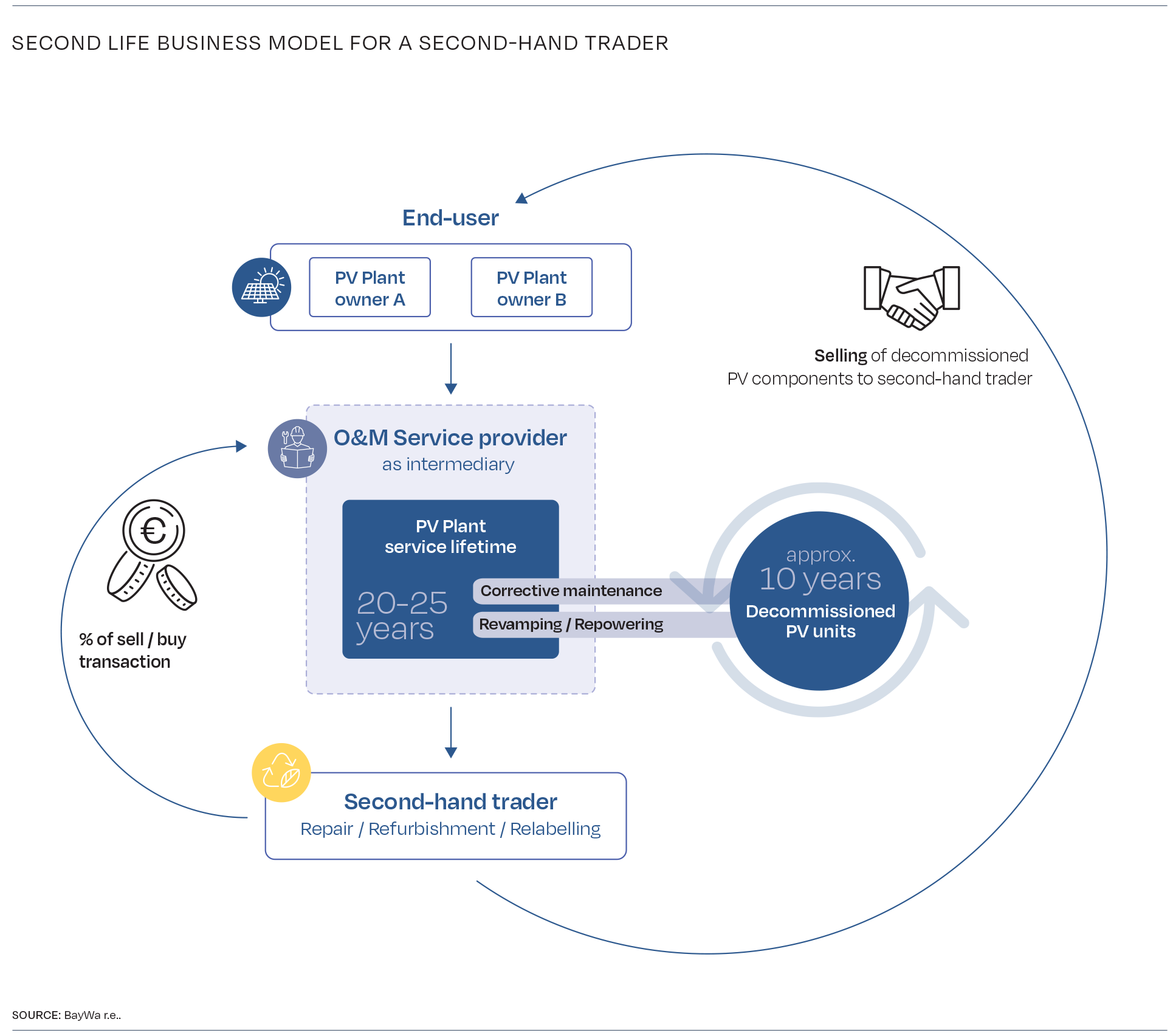
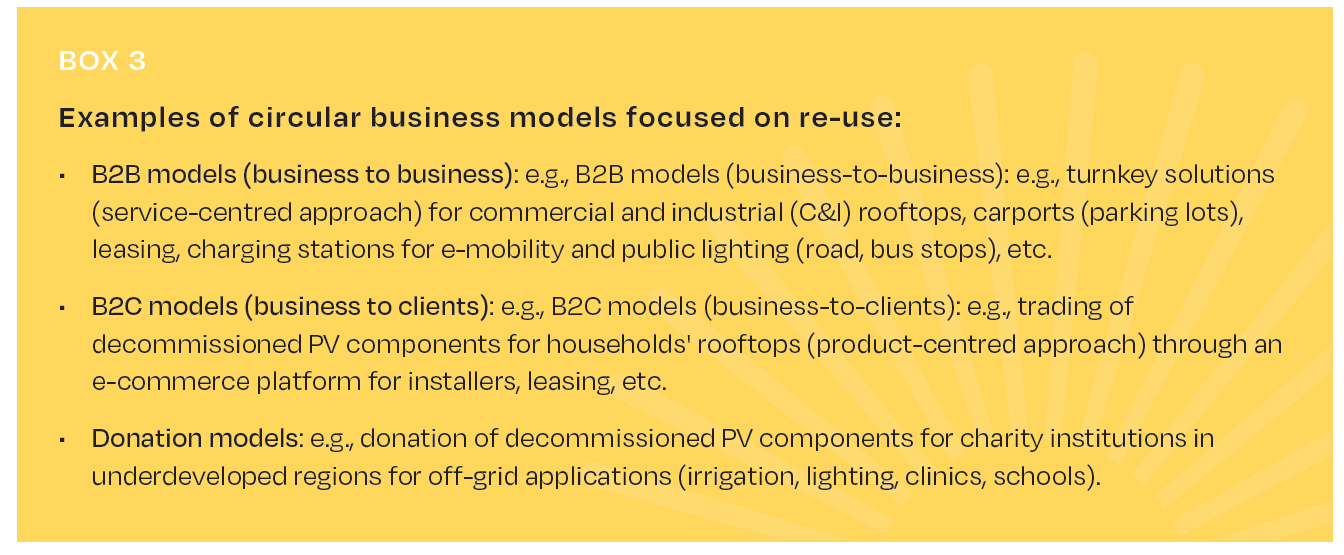
Circular business models can enable resource efficiency, lifetime extension and re-use of products, and have the potential to capture the residual value from by-products or ‘waste’. However, circular business models covering the re-use of PV panels lack visibility.21
B2B (business-to-business) and B2C (business-to- clients) re-use models in the PV sector are already seen in some European countries, where second-hand traders play a key role as a facilitator through online market platforms, for example. Traders might also be involved in repair and relabelling activities (Figure 13).
21 Van Opstal and Smeets, 2023.
3.6. Outlook and innovative trends
Currently, there are some initiatives being explored by companies and research institutes22 that can potentially help prevent PV panel waste, such as:
• The use of advanced data analytics to predict defects, avoid failures and improve efficiency, reducing the need to replace PV panels or inverters earlier than expected. Example: building information modeling (BIM), digital twin, 3D modelling, new wireless technologies for monitoring, big data analytics.
• Repair techniques for PV panels applied in the field. Example: retrofit of anti-reflective coating and repair of backsheets.
• Digital tools and smart cost-efficient and reliable solutions. Examples: integrating Radio Frequency Identification (RFID) in PV panels to facilitate reverse logistics, optimised tracing of their bill of materials (BOM) details, maintenance interventions, repairs, etc.
22 Oviedo Hernandez et al., 2022.